There are ~4.39 million apps available on both App Store and Google Play. The mobile app market is growing by about 12–15% each year, adding tens of billions of dollars in value annually.
If you see the market potential and plan to launch a mobile app, one of the most important decisions to make is the choice between native and cross-platform mobile app development.
- Would cross-platform development be sufficient for our product?
- In what cases should we choose native development instead?
- Do we really need separate apps for iOS and Android?
- Which option will be more cost-effective in the long run?
Choosing between native and cross-platform development has long-term implications in terms of cost, time, and functionality for your business, so it is natural for business leaders to face this dilemma.
Drawing on my experience working with various mobile app projects, in this article, we’ll explore both native and cross-platform development and weigh the pros and cons of each.
What Is Native App Development
The term native mobile app development refers to building a mobile app exclusively for a single platform. The app is built with programming languages and tools that are specific to a single native platform.
What is a native platform?
It is an operating system and environment that a specific device is built to run. Applications designed for that platform are developed using its official tools, languages, and frameworks.
There are two main mobile OS platforms — Apple's iOS and Google's Android. For example, you can use Java or Kotlin for native application development in Android and choose Swift and Objective-C for iOS apps.
Native application development delivers an exceptional user experience because the interface follows the platform’s native design patterns. For example, iOS apps follow Apple’s Human Interface Guidelines, while Android apps follow Material Design. This makes the app feel familiar and intuitive for users.
However, startups are concerned about the high cost of native mobile app development. To support both iOS and Android, teams usually need to build and maintain two codebases, which increases both time and budget requirements.
To manage this, many companies start with a single platform based on their target audience, then expand to a second platform once the product gains traction.
The best approach in this scenario is often to work with an experienced development partner who can help evaluate the options and recommend the most cost-effective strategy for your product.
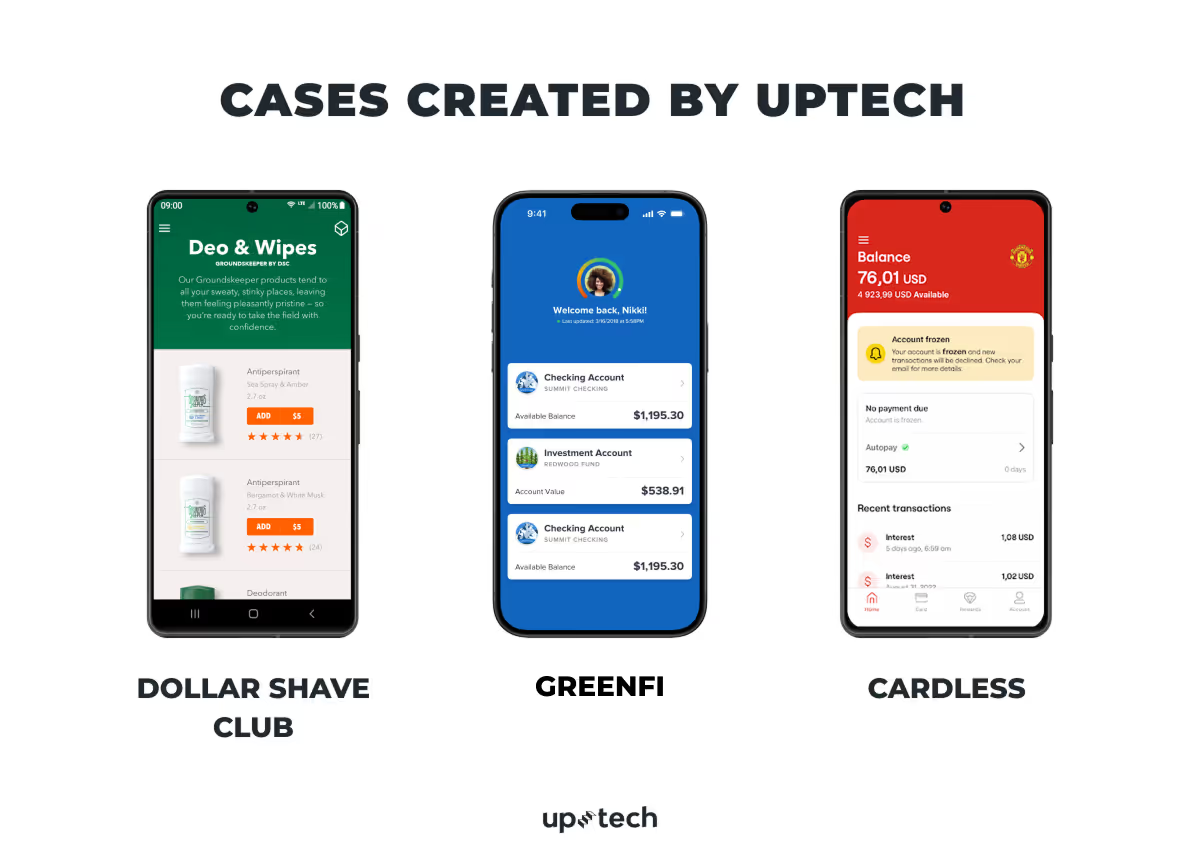
At Uptech, we’ve done our fair share of native mobile app development using Java/Kotlin or Swift/Objective-C.
Some of our notable projects are GreenFI, Dollar Shave Club, and Cardless.
Now that we understand how native development works, let’s look at the main advantages it offers.
Pros Of Native Mobile App Development
There are specific pros that native mobile application development can bring to your business if you choose it as an option.
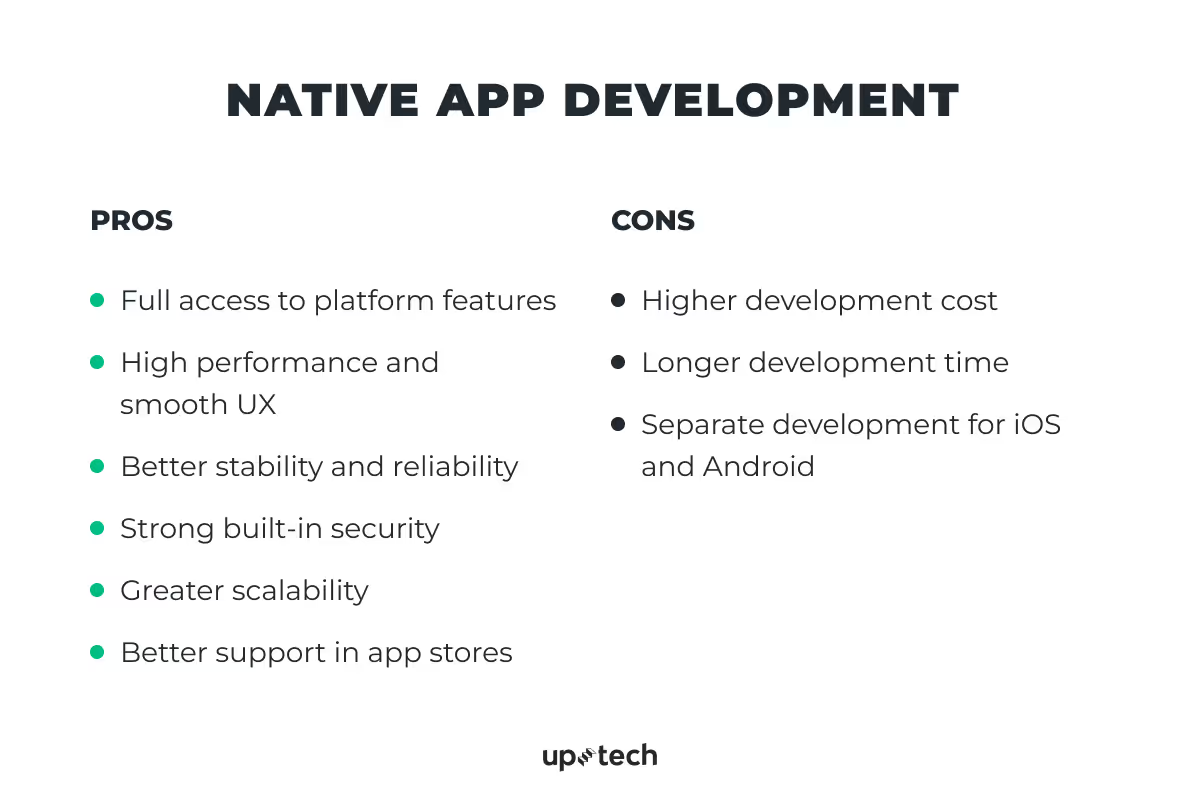
Broad functionality
You’ll have access to every API and tool provided by the platform that you’re working on. Technically, there are no limits on how the programmers could work with the new app.
Better store support
Native apps often deliver better performance and responsiveness, which can contribute to stronger user ratings and retention.
Greater stability and reliability
Since native apps use the official SDKs and tools provided by the platform, they tend to be more stable and predictable. Updates to the operating system are also easier to support because native frameworks are updated alongside the platform.
Increased scalability
Apps built for the native environment also tend to be more scalable, thanks to the flexibility in resource management and the array of tools available.
Stronger security
Native platforms usually provide built-in security mechanisms such as secure storage, encryption tools, and biometric authentication. Developers can integrate these features directly, which helps protect sensitive data and improve application security.
High performance and great UX
The direct interaction between the code and the underlying resources results in high performance. As mentioned earlier, native mobile apps generally have a better UX that is synonymous with the platform.
Cons Of Native App Development
As explained earlier, native development means building separate apps for each platform. This directly impacts both timeline and cost.
Longer development time
Because iOS and Android apps are built separately, the work cannot be reused across platforms.
In practice, this means either:
- building one platform first, then the second
- or running two parallel development tracks
Both options increase the overall timeline compared to shared-code approaches.
Higher development cost
More development time naturally leads to higher costs.
With native development, you’re effectively investing in two products instead of one — separate codebases, separate testing, and ongoing maintenance for each platform.
However, this cost comes from the same source as the benefit: full control over performance, UX, and platform capabilities.
Looking for mobile app development services to create a user-friendly and profitable mobile application? Contact us.
When the goal is to move fast, validate ideas, and reach both platforms early, cross-platform development becomes a natural next step for many teams. Let's explore this alternative.

What Is Cross-Platform App Development?
Cross-platform mobile app development is the process of creating an app that works on several platforms. This is done by using tools like React Native, Xamarin, and Flutter, where the apps created can be deployed on both Android and iOS.
With frameworks like React Native, Flutter, or Xamarin, teams can build one application and deploy it on both iOS and Android.
This approach is especially effective when your goal is to:
- reach a broad audience across platforms from the start
- reduce time to market
- optimize development and maintenance costs
Because much of the code is shared, teams can move faster and iterate more efficiently compared to building separate native apps.
Cross-platform apps are a strong fit for products that don’t rely heavily on low-level device features or complex platform-specific interactions. In these cases, they can deliver solid performance and a consistent user experience across both platforms.
Our team has extensive experience building cross-platform apps. Some of the apps include Jack’s Flight Club (iOS, Android) and Daily Burst (iOS, Android).
We work with such companies as GOAT — the global retail platform for products from the past, present, and future. Check more of our cases in the portfolio.
Pros Of Cross-Platform Mobile App Development
Because cross-platform development is based on a shared codebase, it changes how teams approach time, cost, and scaling.
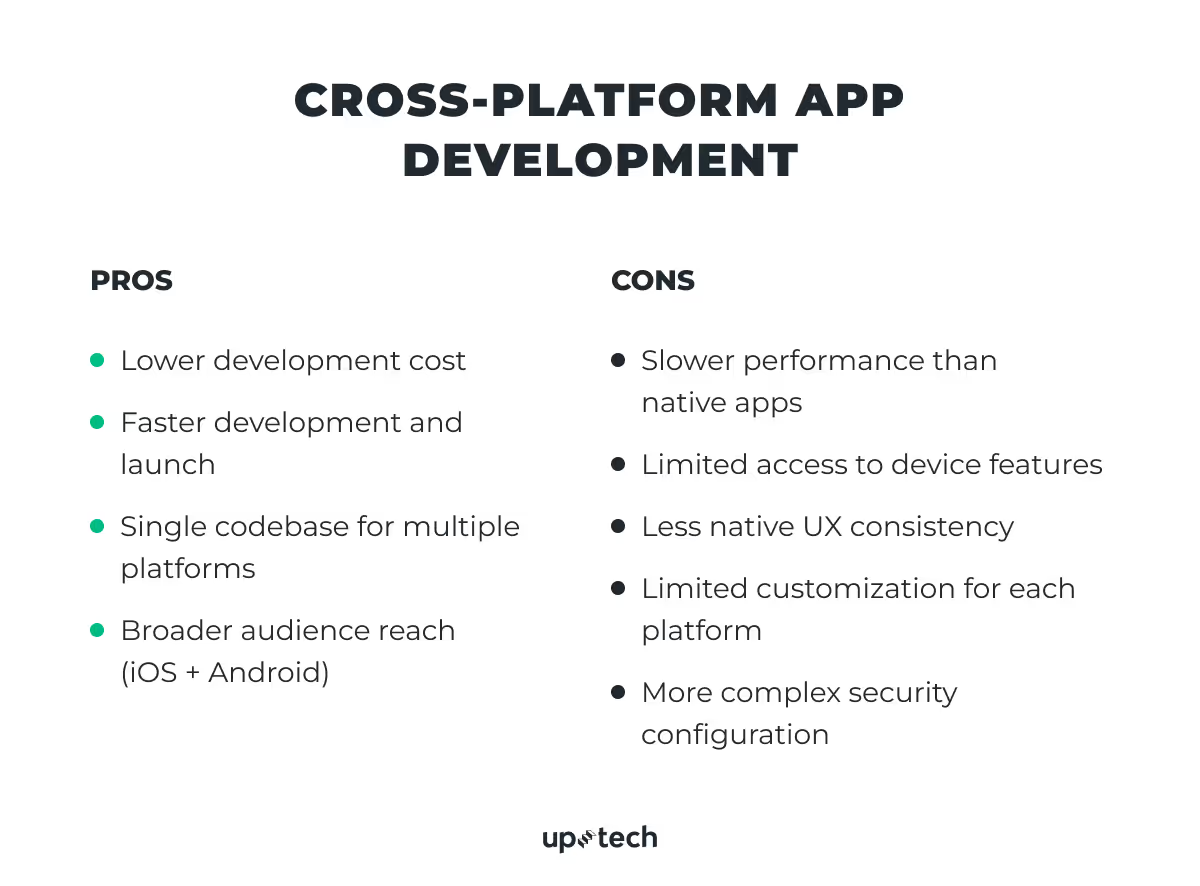
Faster time to market
With one codebase for both iOS and Android, teams don’t need to build two separate apps.
This significantly reduces development time — especially at the MVP stage, when speed matters most.
More efficient development costs
Less development time means lower costs.
Instead of funding two parallel teams, you can build and maintain both platforms with one team and shared logic.
Shared codebase and easier maintenance
Most of the application logic is written once and reused across platforms.
This makes updates, bug fixes, and feature releases faster and more consistent, since changes don’t need to be implemented twice.
Simultaneous launch across platforms
Cross-platform makes it easier to release on iOS and Android at the same time.
This is especially important for products that rely on early traction, marketing momentum, or network effects.
Cons Of Cross-Platform App Development
Now let’s look at some cons of cross-platform app development, again, comparing them against native mobile app development.
Limited access to device capabilities
Developers may have difficulty accessing smartphone functionalities like the microphone, camera, and geolocation in ways possible for a native app. Some advanced capabilities may require additional plugins or custom native modules.
Platform customization
User interface expectations still vary between iOS and Android, even as design patterns become more aligned.
Cross-platform frameworks can deliver a consistent experience across platforms, but tailoring interactions and visuals to match each platform’s conventions may require additional effort. Native development makes it easier to fully align with platform-specific UX patterns when that level of polish matters.
More complex security configuration
Since cross-platform apps interact with multiple environments and libraries, managing security across the app technology stack can become more complex. Implementing advanced security features may require additional configuration or custom development.
Given the specific approach, the choice between native and cross-platform development depends heavily on the specific needs of your product.

What To Consider When Choosing Between Native and Cross-Platform Development
When deciding between native and cross-platform development, several factors should guide your decision.
Device feature access
If you’re building an app that’s just displaying information fetched from the network, cross-platform development will be a good choice. However, if it involves heavy processing or requires access to low-level APIs like Bluetooth, you’ll want to go with native mobile app development.
Cost
Native mobile application development produces apps with high performance, but it can be costly to build. If you have a limited budget to work on, cross-platform app development is the ideal choice. You’ll save around 30%-40% as only a single codebase is created for an app that works on both Android and iOS.
Development time
In some projects, you’ll want to get an MVP app up as soon as possible. This is where you’ll want to consider cross-platform mobile app development. You don’t have to work on two versions of the app. Instead, only a single cycle of development is needed for an app to be released for Android and iOS.
UI/UX design
If you’re looking for stunning visuals and experience, the answer lies in native mobile app development. Developers have access to UI/UX components when developing in a native environment. Opting for cross-platform will greatly limit the UI/UX element of the app.
Target audience and platform distribution
Your decision should also be guided by where your users are.
In some markets, iOS apps dominate, while in others Android has a larger share. If your audience is concentrated on a single platform, starting with native development for that platform is often the most practical approach.
Maintenance and updates
Maintaining an app after launch is just as important as building it. With cross-platform development, a single codebase simplifies updates and bug fixes. Native apps, on the other hand, may require changes to be implemented separately for iOS and Android.
Security concerns
Security needs should also influence your choice of development approach.
Native apps benefit from built-in platform security features like secure storage, encryption, and biometric authentication. Cross-platform apps can also be secure, but often require additional configuration or native modules. For products handling sensitive data, native development is usually the safer option.

Native or Cross-Platform App?
Your decision has huge implications on the cost, time, and how the users will respond to the app.
Take all the above-mentioned into consideration before making a decision. If you’re still stuck, here are some additional tips.
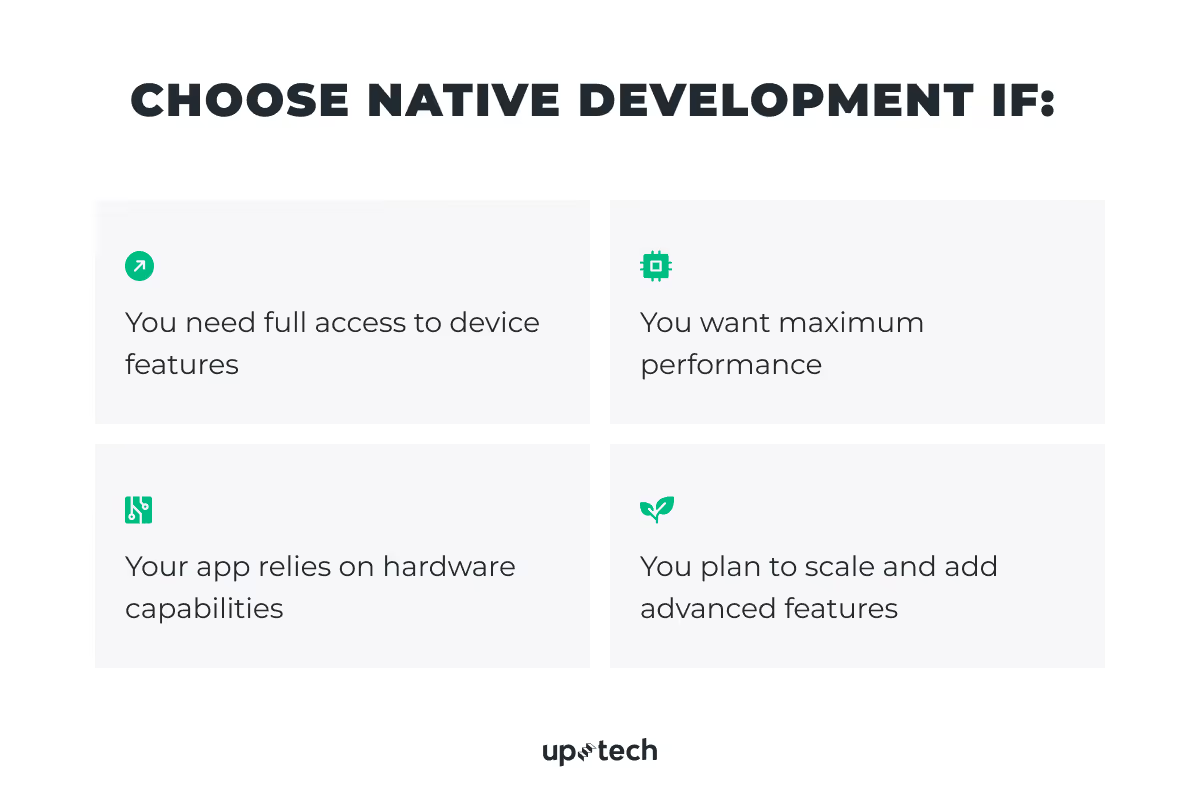
Choose native development if:
- Your application requires full access to all of the phone resources and services
- You want to build the most responsive application
- You’re looking to take full advantage of the mobile phone’s hardware
- You want an app that can be easily updated and enhanced with new features in the future
- Your product requires a platform-specific user experience that closely follows iOS or Android design standards
- You expect the application to scale significantly and handle high user activity
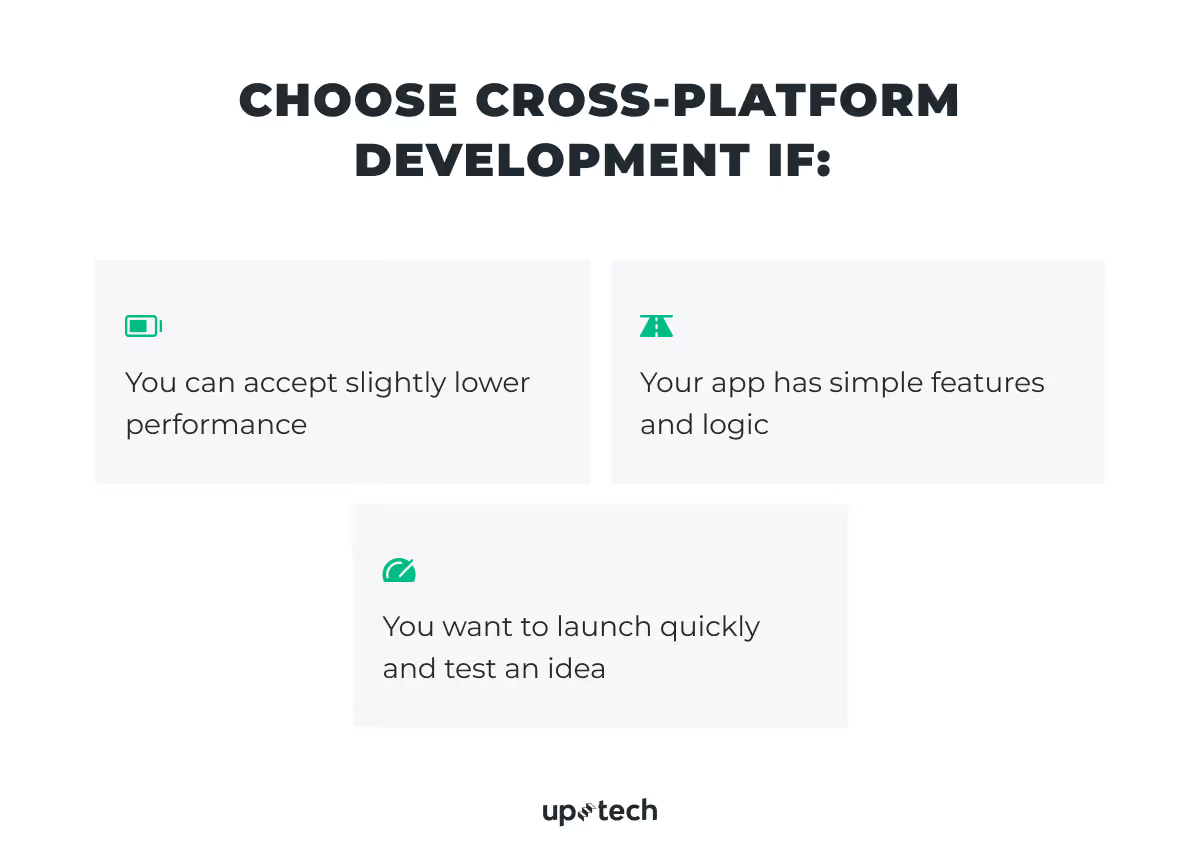
Choose cross-platform mobile app development if:
- You’re building an MVP or validating a product idea and need to move fast
- You want to launch on both iOS and Android at the same time
- Your app is primarily data-driven and doesn’t rely heavily on device-specific features
- You’re working with a smaller team and want to maximize output with a single codebase
- You need to iterate quickly based on user feedback before scaling further
Middle Ground: Hybrid Development
In some cases, companies choose hybrid development as a middle ground between native and cross-platform approaches.
Hybrid apps are built using common web technologies and then packaged inside a mobile application. Instead of being developed entirely for iOS or Android, the app runs inside a built-in browser component on the device and connects to the phone’s features, such as the camera or location, through special integrations.
This approach allows teams to reuse code across platforms while still delivering a mobile app that can interact with device features.
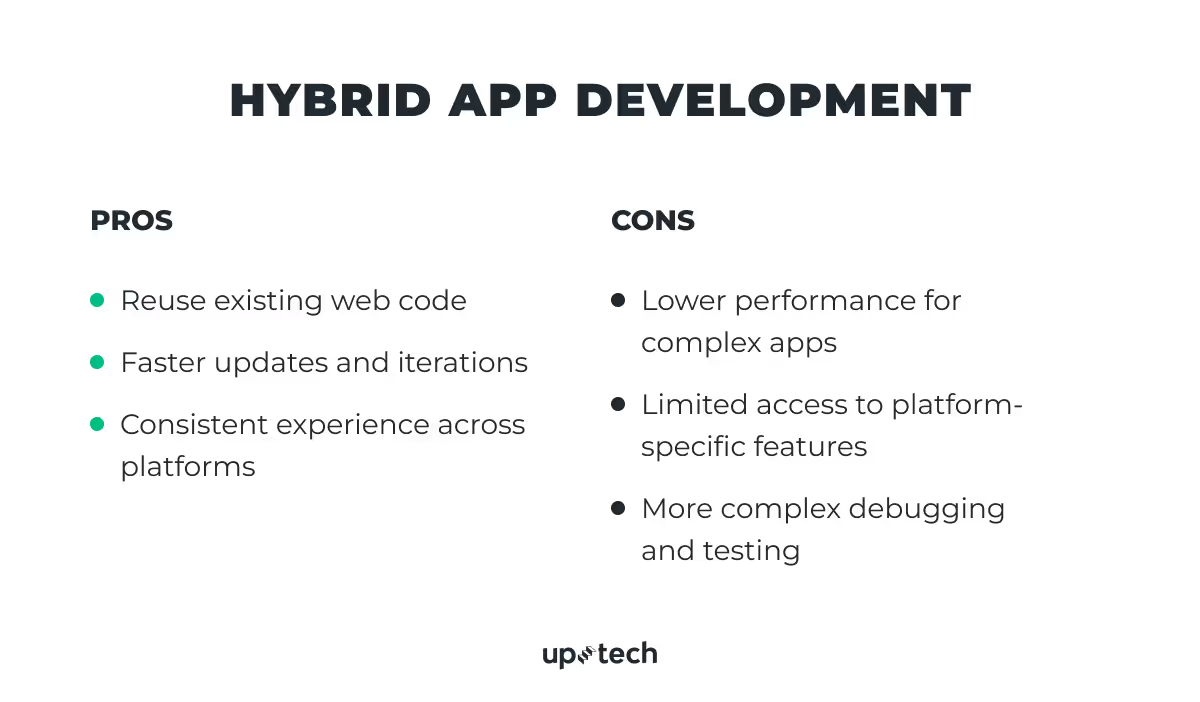
Pros of hybrid app development
Hybrid development offers several advantages, particularly for companies that want to reuse existing web technologies while still distributing their product as a mobile app.
Reuse of existing web applications
Companies that already have a web platform can often reuse significant parts of their code and logic when building a hybrid app, reducing the effort required to launch a mobile version.
Faster iteration and updates
Hybrid apps make it easier to push updates and improvements, since much of the functionality is managed through web technologies rather than platform-specific code.
Consistent experience across platforms
Because the same interface is shared across devices, hybrid apps can provide a consistent layout and functionality on both iOS and Android.
Cons of hybrid app development
Despite its efficiency advantages, hybrid development also introduces several limitations that teams should consider before choosing this approach.
Performance limitations for complex apps
Because hybrid apps run inside a WebView, they may struggle with graphics-heavy features, complex animations, or real-time interactions.
Challenges with platform-specific features
Implementing functionality that behaves differently on iOS and Android can be difficult in hybrid apps, sometimes requiring custom native code.
Debugging and testing complexity
Hybrid apps combine web technologies and native environments. This can make troubleshooting issues more difficult, as developers may need to investigate both layers.

Native vs Cross-Platform vs Hybrid: Comparison Table
Conclusion
Choosing between native and cross-platform mobile app development involves balancing performance, cost, development speed, and long-term product goals. The right approach depends on your app’s complexity, timeline, budget, and team expertise.
Native development delivers the best performance and platform-specific user experience, but typically requires higher costs and separate development for each platform.
Cross-platform development allows teams to launch faster and reduce costs by using a shared codebase, making it a practical option for MVPs and products that need to reach both iOS and Android quickly.
Ultimately, the best choice is the one that aligns with your product requirements and business goals.
Still doubtful about choosing between native vs cross-platform mobile app development?
Contact us for a free consultation with our team.