Thanks to SaaS-based application development, businesses can successfully deliver services through cloud computing and subscription-based monetization models.
As of 2025, the overall market value of SaaS apps reaches about $370–408 billion, and this number is expected to reach roughly $780–840 billion by 2030 under current growth projections.
Though much in demand and popular, SaaS app development is also a very competitive business domain.
I have worked on multiple SaaS mobile and web application development projects and have gained a deep understanding of the process.
In this article, I will highlight the characteristics of SaaS app development and outline the steps involved. And, mainly, I’ll try to answer the question: what is SaaS application development?
So let’s dig right in!

What is a SaaS Platform?
SaaS is short for “Software as a Service.” And it reflects the meaning of the concept. This is a business model where the provider delivers a service to you under a subscription.
That said, the user does not have to purchase the software along with servers and additional software. Usually, the whole processing is carried out on servers in digital clouds, to which users access via browser, mobile app, or API. In other words, the user works with a fully functional, ready-made solution online.
Compare it to real estate. Buying a house and renting both have their pros and cons. Yet, in some cases, renting wins the battle in many respects. One of them is that the owner holds the responsibility for the maintenance rather than the leaseholder. And, well, affordability also plays an important role.
The same works for SaaS applications: they put less burden on the users than the purchase of licensed software — no need for a user to waste time on the program’s setup on every user’s computer. Instead, the SaaS app providers take on all the technical aspects of development and maintenance.
So the benefits for the users include:
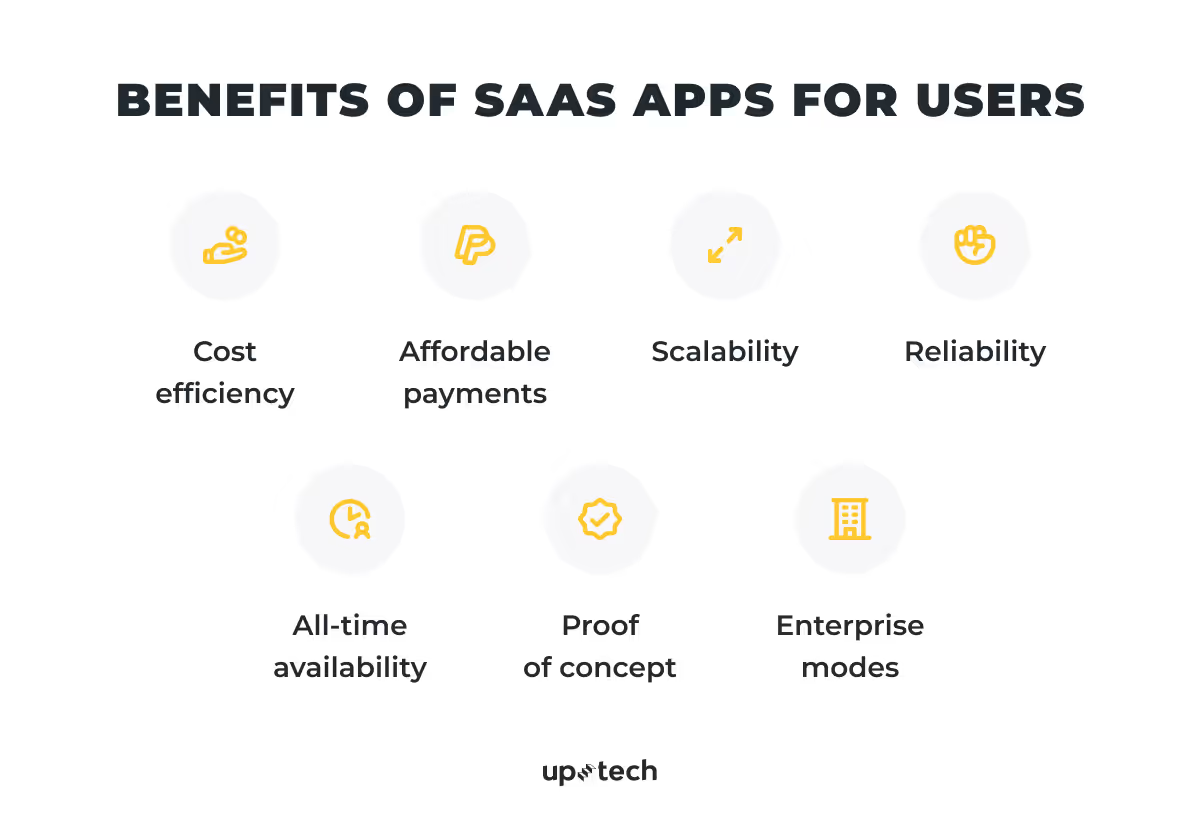
- Cost-efficiency: monthly subscriptions are much more affordable compared to purchasing the software and all the additional tools.
- Scalability: if the number of users in your company grows, a SaaS app is easily scalable for that.
- Reliability: Servers of cloud-based applications are situated all over the world. Even if one or several servers go out of order, the app will remain online.
- All-time availability: SaaS applications are accessible any time, from anywhere, and via any device. All it takes is singing in.
- Trial opportunity: Using a SaaS application, a user has the opportunity to try the service and decide if they want to keep using it.
- Enterprise modes: SaaS apps usually offer an enterprise package for businesses. They include special features, tools, and methods for team collaboration.
Examples of SaaS Applications
SaaS applications span almost every business function today, from everyday productivity to highly specialized enterprise workflows.
Productivity and collaboration tools
Some of the most familiar SaaS products fall into this category. Google Docs and Microsoft Office 365 transformed how teams work with documents. Instead of local installations and file sharing via email, users collaborate in real time, access files from any device, and rely on built-in version control and automatic backups.
Similarly, tools like Slack and Notion centralize communication, documentation, and workflows. They replace fragmented tools with a single, continuously updated environment that scales as teams grow
Business management and performance
SaaS is widely used for internal operations and performance tracking. For example, Plai helps organizations define, track, and analyze OKRs without building custom internal systems. Teams access dashboards through a browser, while updates, data security, and scaling are handled by the provider.
Customer and sales management tools such as Salesforce or HubSpot are also classic SaaS examples. These platforms centralize customer data, automate workflows, and integrate with dozens of third-party services — capabilities that would be complex, costly, and time-consuming to maintain in-house.
A newer example in this category is Opsium, a SaaS product built by Uptech to help teams gain better visibility into operational performance and decision-making. Opsium focuses on unifying operational data and turning it into actionable insights, allowing businesses to manage processes, performance, and outcomes from a single platform rather than across disconnected tools.
Together, these examples show how SaaS has become a foundational layer for modern business management, supporting everything from goal tracking and CRM to operational intelligence, without the overhead of custom-built internal systems.
Marketing and analytics platforms
Many marketing tools are delivered exclusively as SaaS. Platforms like Google Analytics, Mailchimp, or Ahrefs allow businesses to analyze traffic, run campaigns, and measure performance without managing infrastructure or data pipelines. These tools continuously evolve, reflecting changes in platforms, algorithms, and compliance requirements.
E-commerce Platforms
E-commerce solutions are another area where SaaS lowers the barrier to entry. Platforms such as Shopify provide a fully managed environment for launching and operating online stores, including hosting, payments, security, and integrations. Merchants can launch a store in hours rather than months.
Other solutions like WooCommerce and Magento combine SaaS principles with higher levels of customization. While technical involvement varies, these platforms still remove the need to build core e-commerce functionality from scratch.
Benefits of Building SaaS Applications
It is not surprising that from the perspective of users, the benefits of SaaS applications development are manifold.
But it is less evident that building SaaS applications can also be advantageous for startup founders. Here are the benefits of building a SaaS application business.
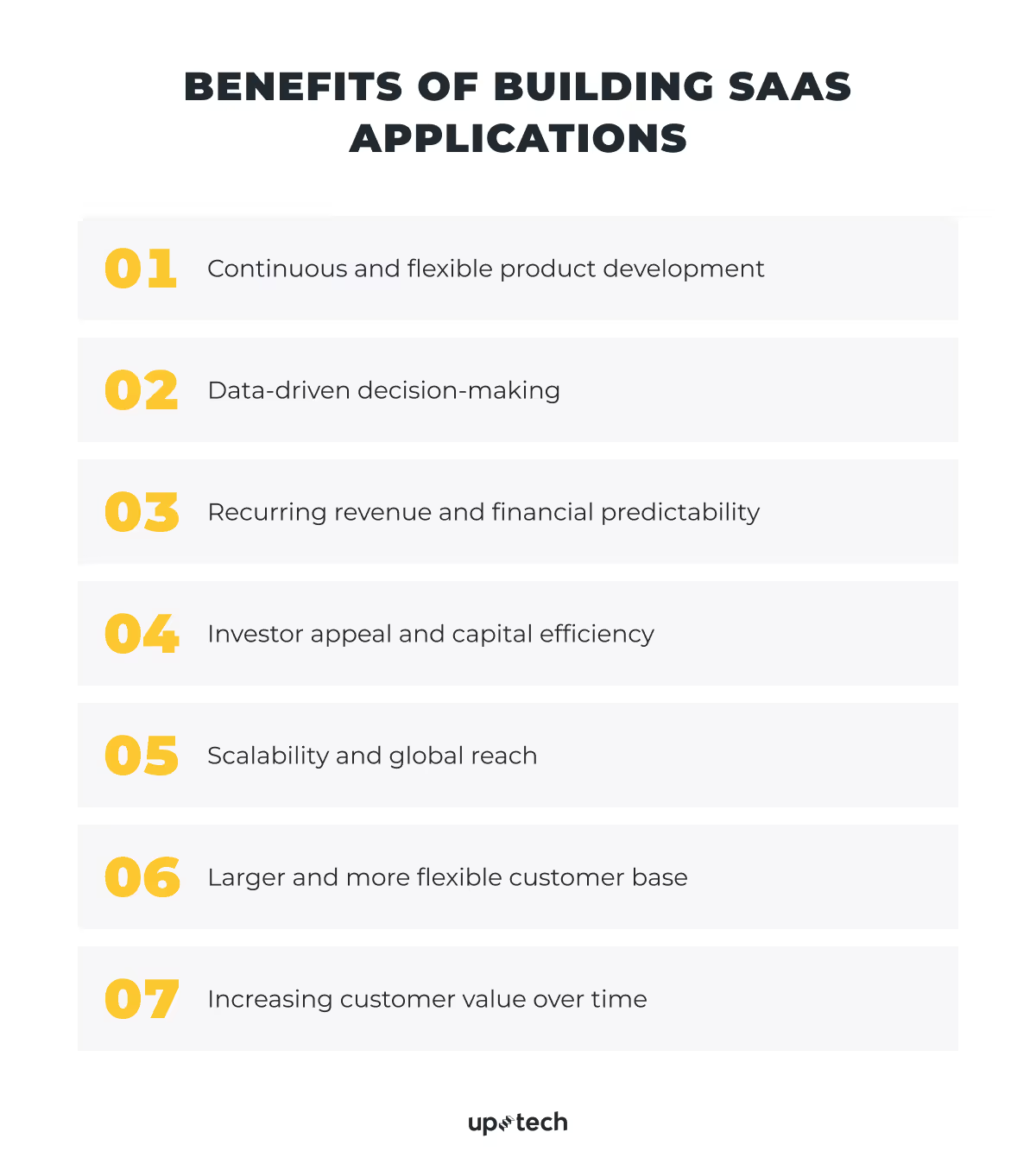
Continuous and flexible product development
SaaS development doesn’t end at launch. Because the product is delivered centrally, founders can continuously refine features, improve performance, and adapt the product based on real usage data. Instead of relying on infrequent major releases, teams iterate in smaller, faster cycles, keeping the product aligned with evolving customer needs.
Expert’s Tip: You can even add custom features to make your applications suitable for a particular business. For example, once we got our first users at Plai, some of them asked to integrate custom admin boards. So we did it to provide a better customer experience.
Data-driven decision-making
SaaS products generate a constant flow of behavioral and performance data. For founders, this data becomes a strategic asset, guiding roadmap decisions, feature prioritization, churn reduction, and monetization strategies.
Over time, these insights compound into a measurable competitive advantage, replacing assumptions with evidence.
Recurring revenue and financial predictability
The subscription-based SaaS model creates recurring revenue that is easier to forecast and scale than one-time license sales. Predictable cash flow supports long-term product investment, reduces financial volatility, and provides a solid foundation for sustainable growth.
Investor appeal and capital efficiency
From an investor’s perspective, SaaS businesses are easier to evaluate and benchmark. Revenue is recurring, customer relationships are long-term, and growth can be tracked incrementally through well-defined metrics.
In addition, SaaS products tend to be capital-efficient: once the core product and infrastructure are in place, the marginal cost of onboarding new customers remains relatively low, improving unit economics as the business scales.
Scalability and global reach
SaaS products are inherently designed for scale. Expansion into new markets typically requires adjustments to pricing, localization, or compliance — not a fundamental change to the product or business model. This ability to grow internationally with relatively low friction significantly increases long-term market potential.
Larger and more flexible customer base
Lower upfront costs reduce the barrier to entry for customers, allowing founders to reach a broader audience. At the same time, SaaS enables flexible pricing models, from self-serve plans to enterprise tiers, making it possible to serve startups and large organizations within the same product ecosystem.
Increasing customer value over time
SaaS gives founders the ability to continuously refine and expand the product’s value. Even if the initial version fails to fully meet market expectations, ongoing iteration allows teams to improve functionality, address user pain points, and evolve the product into a core tool customers rely on, driving loyalty and long-term retention.
Key Considerations Before Building a SaaS Product
SaaS development differs fundamentally from building traditional, one-time–purchase software.
Beyond technical implementation, it requires early decisions that directly affect scalability, security, costs, and long-term product viability. Below are the key areas to evaluate before starting development.
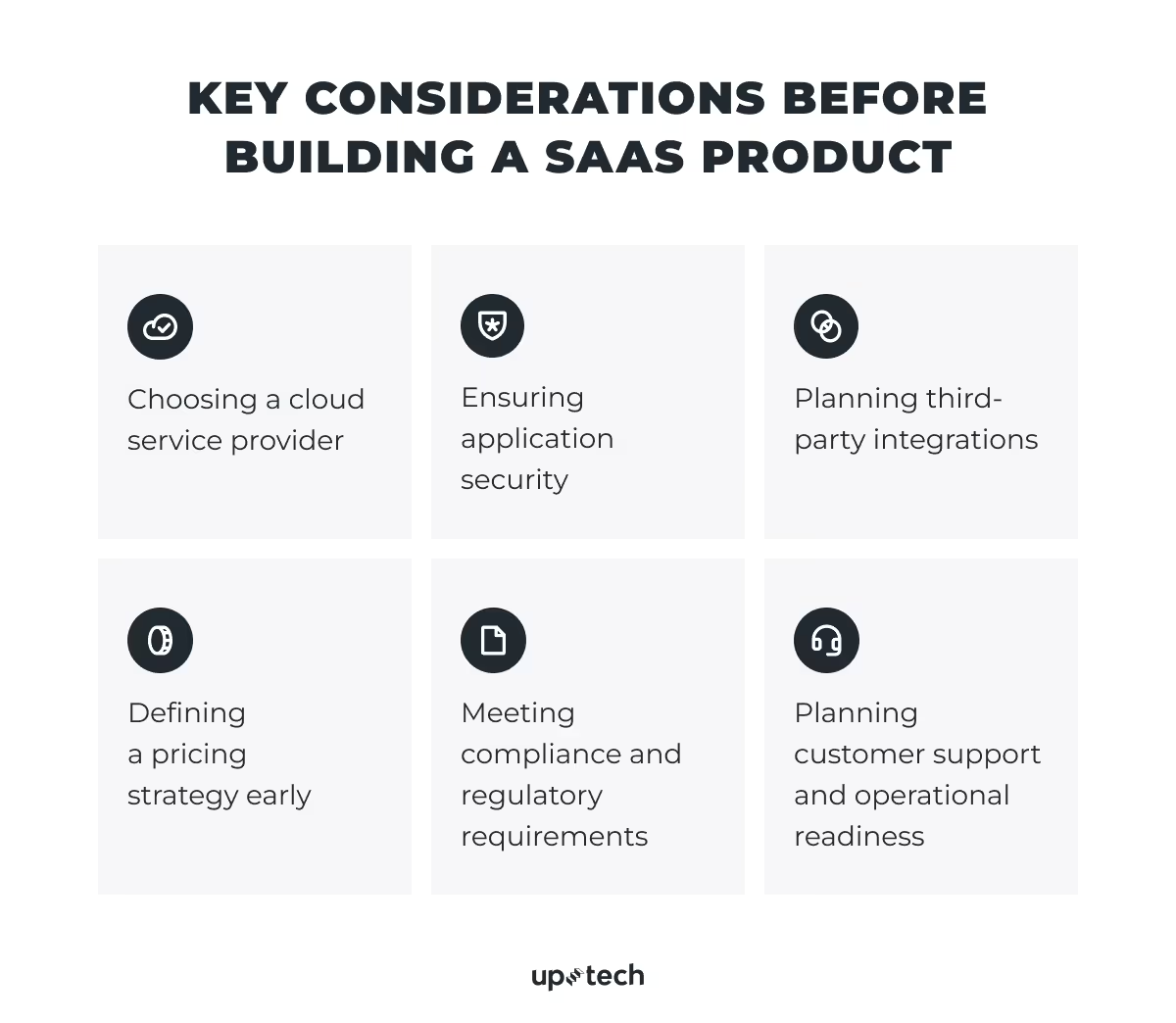
Choosing a cloud service provider
SaaS applications are inseparable from cloud infrastructure, making the choice of a cloud provider a critical early decision. Your provider will influence performance, security, scalability, and operating costs throughout the product’s lifecycle.
Thankfully, there’s a wide variety to choose from. It can be a big-name cloud provider, like Microsoft, AWS, or Azure, or a local service.
Here are the factors that can influence your choice:
- Security capabilities: native tools for access control, encryption, monitoring, and compliance
- Pricing model: how costs scale with usage and growth
- Service coverage: availability of managed databases, storage, hosting, and monitoring services
- Geographic presence: data centers located in or near your target markets
Pro tip # 1: Big-name providers always have many services and tools to adapt to the growth of your business. So if you have the potential to scale with providers like Google Cloud Platform or AWS, you always have the space to grow.
Pro tip # 2: Using a big-name provider can be excessive if you want to enter a specific local market. In that case, you can find a cloud provider with servers located in the required region. By the way, combining several providers can also be a viable option.
Ensuring application security
Working with a SaaS business, you always deal with databases. Moreover, when data is kept in the digital space (cloud), security issues arise twice as often. Thankfully, cloud providers usually have the security issues covered.
For example, Amazon Web Services (a cloud-computing provider) offers a variety of security tools that can eliminate unnecessary traffic, restrict public access to certain components, and monitor public repositories.
Most major cloud providers offer built-in security tools such as firewalls, network isolation, monitoring systems, and access policies. These tools help limit unnecessary traffic, restrict public access to sensitive components, and detect suspicious activity.
However, infrastructure-level security should be complemented by application-level measures, including authentication, authorization, and secure data handling practices.
Planning third-party integrations
SaaS products rarely operate in isolation. Users expect them to connect seamlessly with other tools they already use: CRMs, payment systems, analytics platforms, communication tools, and more.
Building all functionality from scratch is rarely efficient. Instead, integrating established third-party services allows teams to reduce development time, lower costs, and focus on core product value. Common examples include payment providers, mapping services, authentication tools, and messaging platforms.
In practice, these integrations can significantly accelerate development. For example, when working on Plai, the team integrated with Slack to handle notifications and internal updates. This reduced custom development effort and allowed the team to focus more on business logic and user experience.
Defining a pricing strategy early
Pricing is not something to “figure out later” in SaaS — it directly shapes product scope, architecture, and go-to-market strategy. Decisions such as subscription tiers, usage-based pricing, freemium access, or enterprise plans influence how features are packaged, how onboarding works, and how customers perceive value.
An early pricing hypothesis helps founders avoid building features that are expensive to maintain but difficult to monetize. It also clarifies which customer segment the product is truly designed for: individual users, SMBs, or enterprises.
While pricing will change over time, starting with a clear structure prevents misalignment between product complexity and revenue potential.
Meeting compliance and regulatory requirements
Many SaaS products operate in regulated environments, especially in industries like healthcare, finance, education, and HR. Compliance requirements. such as data protection, user consent, data residency, or auditability, can significantly influence product design and infrastructure choices.
Even if the initial version of the product targets a less regulated market, founders should assess whether future expansion may require compliance with regional or industry-specific regulations.
Addressing these considerations early reduces the risk of costly redesigns later and builds trust with customers from the outset.

Planning customer support and operational readiness
Unlike one-time software sales, SaaS businesses require ongoing customer relationships. This means founders must plan not only for development, but also for long-term support and operations.
Support readiness includes defining how users will get help, how issues will be tracked and resolved, and how feedback will flow back into product development.
Even simple mechanisms, such as in-app support, documentation, or basic service-level expectations. can significantly improve retention and user satisfaction. As the product scales, these processes become just as critical as the code itself.
8 Steps to Build a SaaS Application
With the key prerequisites covered, we can move on to the SaaS development process itself. Building a SaaS product is not a linear execution task, but a sequence of validation, decision-making, and iteration. Below are 8 steps you’ll typically encounter when building a SaaS product.
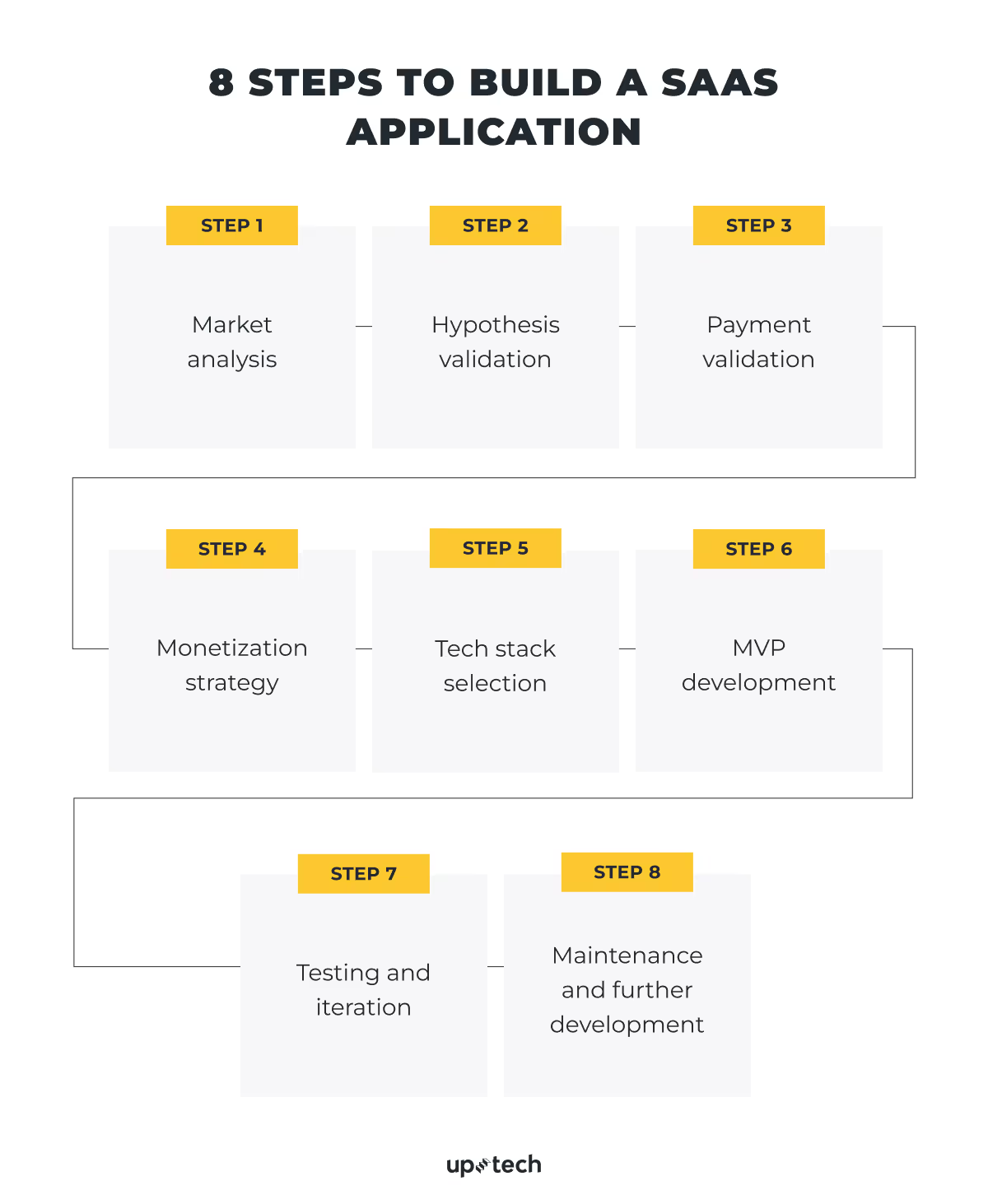
Step 1. Market analysis
So you have an idea of SaaS application development. Great, but you should start exploring the conditions for its development. The first step is to research the users, competitors, and the volume of the market. The main purposes of this step are:
- To identify the target users
- Understand the users’ main problem
- See how users are solving the problem now
- Suggest how you can improve it.
Pro Tip: At this stage, it may occur that there are none or only one or two competitors in the market. Surprisingly, this is not always a good sign. Probably, this is a sign that this market niche is void, and there is no necessity for a new solution to be found.

Step 2. Hypothesis testing
As a result of the first stage, you have suggestions about improving the solution for users. But these are just hypotheses yet. To validate them, you need to complete a round of user interviews:
- Interview your potential audience
- Know what your users want and what they need
- Explore what stops them from achieving their goals
- Make a prototype of your solution and try it with users
Pro Tip: To better understand how your user moves along your app, make a Value Proposition Canvas (VPC) and a Customer Journey Map (CJM).
CJM can show how users are solving their problems now. This is important to generate opportunities for how the product can solve these problems better.
VPC is a good artefact as well, which helps to unveil your users’ needs, pains, desires, and generate product solutions including these factors.
Step 3. Payment intent validation
A common early mistake is validating interest without validating payment intent. A viable SaaS business depends not only on usage but on users’ willingness to pay for ongoing value.
This step focuses on:
- Testing pricing assumptions in interviews
- Understanding budget ownership and purchasing behavior
- Identifying what users already pay for and why
The goal is to confirm that the problem is valuable enough to justify recurring payments
Step 4. Choose the right monetization model
Another revenue-related issue is the monetization model of your SaaS application. The regular choice here is the subscription-based model. This model has proved beneficial for many businesses. Yet, as practice shows, the subscription-based model also brings some concerns.
Subscriptions require:
- Upfront investment in product and customer acquisition
- Patience, as revenue accumulates gradually
- strong retention, since churn directly impacts growth
Expert’s tip: Things can be even more complicated when you are a SaaS startup. In that case, you need to have a sufficient budget before the product’s launch. Thus, you will avoid the situation when all money has been invested in user acquisition and product development, but monthly payments from users have not started yet.
Step 5. Define the tech stack
By technology stack, we mean the technologies that will be used in your software development. This will include the front-end (frameworks and libraries), back-end (frameworks and libraries), databases, servers, and infrastructure configuration.
It is crucial to consider your SaaS platform’s scalability, potential profits, and startup costs before choosing the mobile tech stack or web tech stack.
Stack decisions should be informed by:
- Expected scale and growth rate
- Security and compliance requirements;
- Development speed and team expertise;
- Long-term maintenance costs.
Choosing technologies that support iteration and scaling is more important than optimizing for short-term performance.
Step 6. MVP development
Finally, we are ready to build the initial version of the SaaS product – Minimum Viable Product (MVP). This is a basic model of your application, developed within minimum timelines and with minimum effort. An MVP covers only the crucial functionalities of your app and unveils the core idea behind the product. The purposes of an MVP can be:
- Testing the product’s hypothesis with early adopters
- Pitching the initial version to the investors
It may come as a surprise to some clients that we build a limited version of the product instead of a full-fledged development. But for startups, it is crucial to validate the basic functionality first and, if accepted well by users, go on to the entire product development.
You can learn more about MVP, its purposes, and peculiarities in our article How To Build MVP: Step-By-Step Guide.
Learn about famous MVP cases and their lessons in 3 Minimum Viable Product Examples To Start A Digital Business
What’s the difference between MVP and PoC? Learn in MVP Vs PoC Vs Prototype: What's The Best Approach?
Step 7. Testing and iterating
Once created, your MVP needs testing with early adopters. In the testing process, you actually check two things:
- If your idea is viable for users
- If the implementation of your idea is good enough for users to adopt it
At this stage, it is crucial to invest time in communication with users. The more feedback you get from users, the more insights you will get about improving your SaaS application. All these insights will be used in the next iteration of the application.
Step 8. Maintenance and ongoing development
Once the product is launched, the new story begins. The story of maintenance and further development. The thing is, you never stop iterating on your product, especially when it comes to SaaS applications. The product maintenance includes:
- Seeking growth opportunities
- Collecting and analyzing user feedback
- Refining onboarding and retention
- Finding unique opportunities
- Seeking new customers and expanding your TA
- Detecting and fixing bugs
For SaaS products, maintenance and development are inseparable. Continuous iteration is the core operating model.

Cost of SaaS Application Development
Finally, let’s address one of the most common questions: how much does it cost to build a SaaS application?
As with most software products, there is no single fixed answer. SaaS development costs vary depending on multiple factors, including feature complexity, product scope, infrastructure requirements, and the geography of the development team.
Key cost drivers typically include:
- The number and complexity of features
- Scalability and performance requirements;
- Security and compliance needs
- Choice of technology stack
- In-house vs outsourced development and regional rates.
Because SaaS products are built for continuous upgrades, it’s also important to consider not only initial development costs but also ongoing expenses for infrastructure, maintenance, and further development.
If you want a deeper breakdown of how development costs are formed, these resources may help:
To get a rough estimate tailored to your project, you can also use the Uptech app development cost calculator, which helps outline potential SaaS development expenses based on your product requirements.
Uptech’s Experience in SaaS-Based App Development
At Uptech, we provide SaaS app development services and know firsthand what it takes to build a first-class SaaS app. Not only have we built multiple SaaS applications for our clients, but we also take pride in creating our own SaaS-based application — Plai.
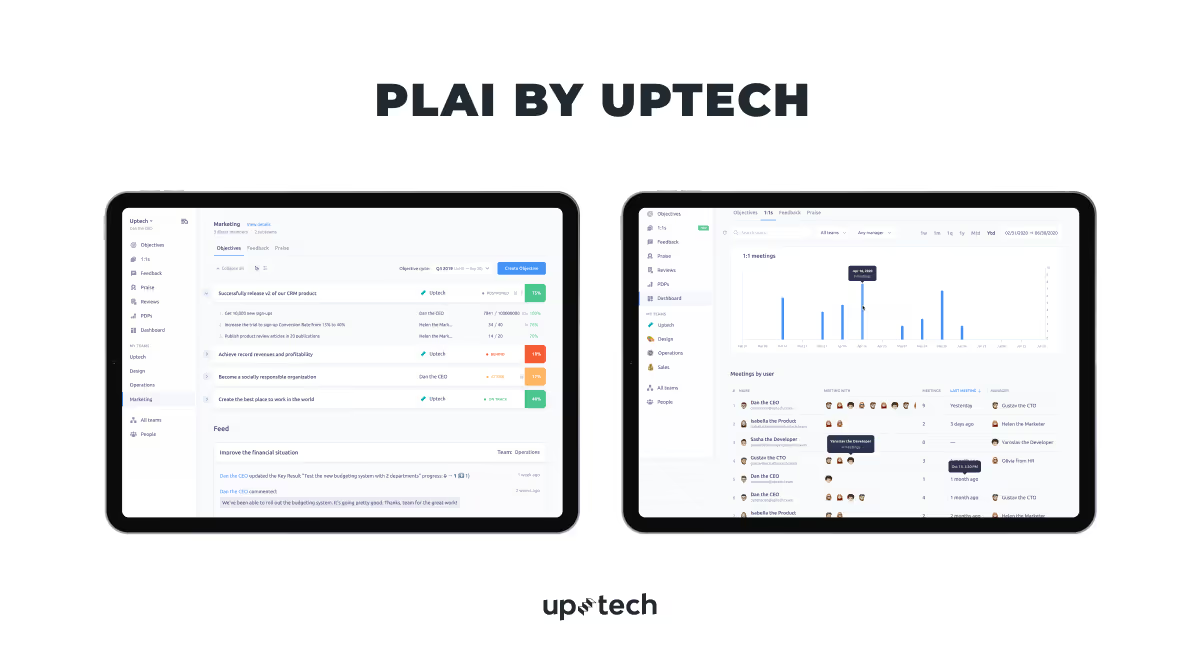
Plai is a SaaS-based performance management platform designed for HR teams. Plai helps companies track team performance, set improvement goals, and manage OKRs within a single system.
For Plai, Uptech led full product development from concept through launch and iteration.
Here’s what we did:
- Product planning and discovery — we defined core user needs and feature scope to align with HR workflows.
- Architecture and development — we designed a scalable SaaS infrastructure that supports frequent updates and integrates seamlessly with growing business needs.
- Customizability and flexibility — we built features that adapt to different team structures, enabling user-driven configuration without sacrificing maintainability.
- Continuous improvement — we used usage data and feedback loops to refine features post-launch
Developing Plai internally gave the Uptech team hands-on experience with the full SaaS lifecycle: from early validation and feature prioritization to monetization decisions, iteration, and long-term maintenance.
This experience allows us to approach client projects not just as engineers, but from a co-founder’s and product owner’s perspective.
Conclusion
SaaS application development differs from other types of software development. It’s not a one-off delivery effort, but a complex, ongoing process where multiple elements must work together.
Successful SaaS products typically rely on:
- An experienced development team with domain expertise
- Continuous user research and iterative product improvement
- Active customer support and clear communication channels
- Well-structured processes
Coordinating all these components is challenging, but it’s also what makes SaaS a powerful and sustainable business model. When done right, SaaS products offer predictable revenue, long-term scalability, and strong demand across industries.
If you’re considering SaaS application development, we’re happy to discuss your idea and help you turn it into a viable, scalable product. Contact us for a free meeting.