Both retailers and consumers understand e-commerce, but many still ask how it differs from m-commerce. The discussion around e-commerce vs m-commerce reflects how people shop today and how businesses should respond.
Businesses, particularly those in the B2C sector, continue to expand their online presence. At the start of October 2025, 6.04 billion people worldwide used the internet, which equals 73.2% of the global population. Online retailers like Amazon have flourished, thanks to the convenience of ordering products from a digital shopping cart.
Smartphones did not create online shopping, but they changed how often and how quickly people buy. Customers now switch between devices during the same purchase journey. Mobile apps and optimized mobile websites support instant access to products, saved payment methods, and faster checkout. As a result, companies invest more in mobile app development alongside traditional web platforms.
How does m-commerce compare to e-commerce in real business terms? Which features directly influence revenue and retention? When does a mobile app make sense, and when is a web platform enough? In this article, you will see key differences, practical use cases, real examples from Dollar Shave Club (DSC) and GOAT, and clear guidance that helps you decide which model fits your business goals.
E-Commerce vs. M-Commerce In a Nutshell
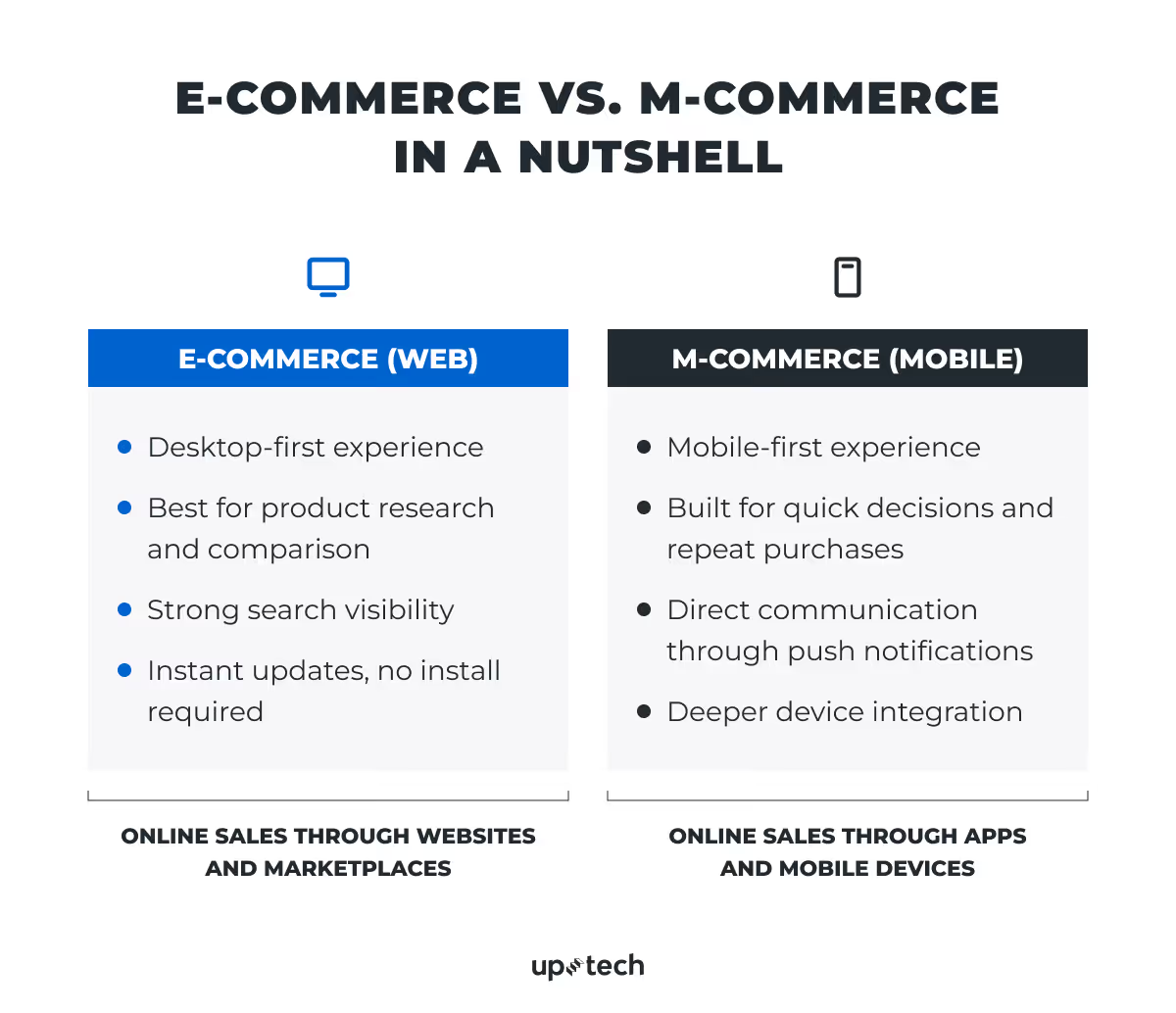
When you look at e-commerce vs m-commerce, the difference comes down to how and where customers shop. Both models support online sales, but they serve different user habits and business goals.
What is e-commerce?
E-commerce, or electronic commerce, is the process of buying and selling on the Internet. Generally, e-commerce refers to online buying activities that happen through websites, online marketplaces, or web platforms.
While names like Amazon pop up when e-commerce is mentioned, the commodities sold online are not limited to physical products. E-commerce also applies to digital products, memberships, or services that are transacted over the Internet.
For businesses, e-commerce typically includes product catalogs, shopping carts, secure payment gateways, order management systems, and customer accounts. It supports both B2C and B2B models and often serves as the foundation of a company’s digital sales strategy.
The global e-commerce market has reached USD 21.62 trillion in 2025. Analysts expect steady expansion in the coming years, with projections pointing to USD 75.12 trillion by 2034.
Approximately 2.8 billion people worldwide made at least one online purchase this year. DHL research shows that 1 in 2 shoppers buy online at least once a week, which reflects how routine online shopping has become.
Around 27% of the global population now shops online. That share continues to grow as internet access expands and digital payments become more common.
There are more than 31 million e-commerce websites and online stores on the internet. Competition is high, which means experience, speed, and trust directly affect conversion rates.
What is m-commerce?
M-commerce refers to online payment transactions that happen over a mobile device, such as a smartphone or tablet. Strong mobile connectivity, improved mobile app security, and mature app development have encouraged retailers to offer services, products, and integrated payment options directly through mobile apps and mobile-optimized websites.
The growth of m-commerce reflects the widespread use of smartphones and the fact that many consumers rely on them as their primary device for browsing, comparing products, and completing purchases.
The global mobile commerce market reached USD 2,239.11 billion in 2025. Mobile transactions now represent a significant share of total online sales across many regions.
Globally, at least USD 4.6 billion flows through mobile money accounts every day. These transactions cover retail purchases, peer-to-peer transfers, subscriptions, and service payments. Mobile payments have become part of everyday financial activity.
Consumer spending in mobile apps reached USD 41 billion in Q2 2025 alone. This figure reflects purchases made inside apps, including retail, digital goods, and subscription services.
There are now more than 7 billion smartphones worldwide. In practice, this means mobile access is nearly universal. For many users, a smartphone is the primary or only device used to browse and shop online.
Mobile traffic already accounts for more than half of global e-commerce visits in many markets. While desktop often shows a higher average order value, mobile leads in frequency and daily engagement.
The Main Differences Between M-Commerce and E-Commerce
M-commerce is becoming increasingly popular among people, but both models serve different purposes. Understanding the differences between m-commerce and e-commerce helps you choose the right channel strategy and align it with real customer behavior.
The table above highlights the structural differences between e-commerce and m-commerce across devices, behavior, cost, and maintenance. Of course, there are other factors, but they are less influential.
Key Capabilities of M-Commerce
While the table outlines high-level differences, m-commerce also brings practical capabilities that affect day-to-day operations. The points below explain how mobile environments support engagement and performance.
1. Device accessibility and on-the-go purchasing
E-commerce typically takes place on desktop and laptop devices through web browsers. These devices support longer browsing sessions, product research, and higher-value purchases. M-commerce happens on smartphones and tablets. Mobile access allows customers to browse and purchase from almost any location.
The difference between the ability to make purchases easily on the spot and logging into an e-commerce website later favors retailers with e-commerce apps. Impulsive shoppers are also better targeted by means of instant access to the shopping cart. Many users switch between devices during the same purchase journey, so mobile often supports quick decisions and repeat purchases.
With the introduction of mobile payment wallets like Apple Pay and Android Pay, mobile users are given more choices to make instantaneous transactions on the spot. Simplified checkout flows can improve conversion rates, especially for impulse purchases.
2. Push notifications
Another obvious advantage m-commerce has over e-commerce development is the use of push notifications on mobile phones. Emails depend on open rates and inbox placement, while push notifications appear directly on a user’s device.
From a retailer's point of view, push notifications are deemed to be more effective. Promotion emails risk being delivered to the spam folder or ignored by users. Push notifications, on the other hand,aredelivered instantly to the user’s mobile.
Today, push notifications can also include product images and personalized offers that lead users back to the app with one tap. This makes push notifications useful for retention and repeat purchases. However, this advantage depends on users installing the app and allowing notifications.
3. Location-based engagement
The only metric used to track e-commerce shoppers on computers is the IP address. The IP of computers gives a loose indication of the whereabouts of shoppers and is limited in terms of locational advertising strategies.
On the other hand, m-commerce uses the various positional tracking technologies on the mobile phones of users, such as GPS, WiFi, and cellular connections. This allows more precise location-based offers and store-related notifications.
For example, a retail outlet that is having an ongoing sale can send notifications to users within a specific radius. A brand with physical stores can promote in-store pickup or local inventory availability.
4. Mobile authentication and payment security
E-commerce platforms often rely on usernames, passwords, and card-based payments.
M-commerce, where transactions are conducted over a mobile phone, has the potential to incorporate better security through additional authentication layers. These may include device identification, biometric login such as fingerprint or facial recognition, and secure mobile wallet integration.
Security depends on the correct implementation in both models. Mobile alone does not automatically guarantee stronger protection.
5. Cross-device experience and personalization
There is a shift from multi-channel to omnichannel in the online retailing industry. Brands are expected to provide a seamless shopping experience to everyone across all devices.
E-commerce platforms support detailed product views and complex filtering. M-commerce apps support faster access, saved preferences, and simplified navigation.
Mobile apps allow personalization based on user behavior. Retailers can respond to user activity with relevant recommendations.
Many customers discover products on mobile and complete purchases later on desktop, or move between channels during the same journey.
6. Platform architecture and ongoing support
A web store usually costs less to launch. You build one responsive site, and it works across devices. If you need to change something, fix a bug, adjust pricing, or update checkout, you push the update on the server, and it goes live right away. No installs. No waiting.
Support for a web platform is fairly straightforward: Hosting, security updates, performance checks, and payment integrations. Most changes stay under your control.
Apps are different. If you choose native development, you deal with two separate versions, one for iOS and one for Android. Apple and Google have their own approval rules. Even small updates may sit in review before they appear in the store. After that, users still need to download the new version.
There is also ongoing upkeep. New OS releases, new devices, screen sizes, compatibility issues. It adds work over time.
That said, apps give you deeper access to the device itself. Biometric login, camera features, secure storage, and offline access. For products with frequent repeat purchases, that extra layer can matter.
So the real question is simple. Where does your traffic come from? How often do customers return? If mobile drives most visits and people buy again and again, an app can justify the cost. If purchases are occasional and growth depends on search or paid traffic, a strong mobile website may be enough.
Check out our guide on m-commerce app development.
E-Commerce vs M-Commerce Benefits
When it comes to evaluating e-commerce and m-commerce, it’s safe to say that both models offer advantages. The right choice depends on traffic sources, purchase behavior, and long-term growth plans.
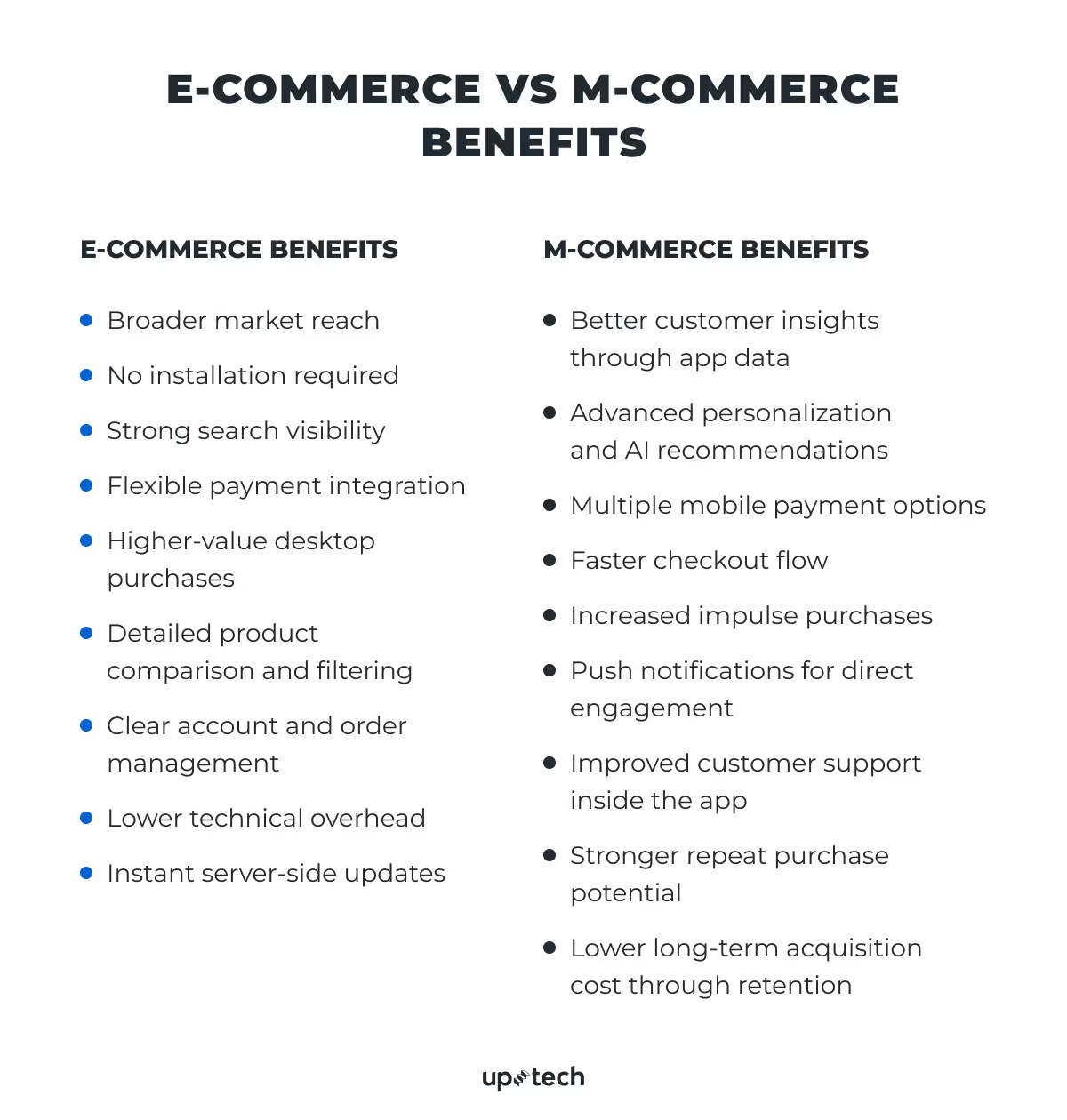
Benefits of e-commerce
Broader market reach
A website is easy to access. People click a link, and they are in. No installs, no extra steps. That matters, especially for someone who just discovered your brand.
Search also works in your favor. If your pages rank well, customers can find your products while actively looking for them. Over time, that kind of traffic builds stability.
Flexible payment integration
Most web stores support standard cards, digital wallets, and installment options. These sit directly inside the checkout page.
If you decide to change a provider or update payment logic, you can adjust it and publish the change right away. There is no waiting for store approval.
Revenue stability through desktop conversion
Desktop visitors often behave differently. They compare products, read details, and open multiple tabs. For higher-priced items, this process helps.
Larger screens make long descriptions and technical specs easier to review. For some businesses, that leads to steadier conversion on desktop.
Clear and structured experience
Web pages give you space. You can show filters, specs, comparison tables, long descriptions.
Account areas and order history are simple to access through a browser. Some customers still prefer that format over an app interface.
Lower technical overhead
A website runs as one system. Hosting, updates, and fixes happen in one place.
When you publish a change, everyone sees it next time they visit. No version control issues. No update prompts.
Benefits of m-commerce
Better customer insights
Understanding the behavior of shoppers is a necessity for retailers to remain competitive in their respective niche. Mobile apps, which are a crucial component of m-commerce, allow retailers to collect crucial information about their users. Consumer-oriented data, such as browsing behavior, shopping interests, and time spent on the app, is helpful for analytics.
With the rise of big data and AI recommendation systems, retailers can send better-targeted promotions that are more likely to engage and convert. The historical data collected also helps strengthen branding efforts by prioritizing elements that resonate with their shoppers.
More payment options
In addition to credit and debit cards, when you develop an m-commerce app, your customers get access to various payment options, such as:
- Apple Pay
- Google Pay
- Amazon Pay
- PayPal Express
- Visa Checkout
- Shop Pay
These services make it easier for your customers to make a purchase on their devices. Your responsibility here is to implement them correctly and secure the payment process.
If you need assistance here, Uptech developers are ready to help you with the payment integrations. We have implemented payment systems for fintech, m-commerce, healthcare, and real estate products, so we know all the ins and outs of it.
Increased revenue
Internet users are spending more time on mobile devices, and shopping for products is just a few taps away. Besides that, push notifications with tailor-made promotions draw users’ attention and lead to better conversion.
M-commerce also encourages purchases. The checkout process is more straightforward, where users can complete checkout with a few touches on the screen. A recent study found that mobile payment services increase impulsive purchases due to convenience and built-in incentives. Naturally, this would lead to more sales and fewer discarded shopping carts.
Enhanced customer experience
The secret to a thriving business is to keep its customers continuously engaged. In other words, your customers need to perceive that they are given the best experience ever. This goes beyond the ability to browse and shop at any place or time.
M-commerce can improve customer experience through faster support and easier account management. Features such as in-app live chat, simple return requests, and clear order tracking make the process more convenient for users.
Mobile apps also allow more precise personalization. Product suggestions, tailored promotions, and location-based offers rely on user behavior data and app activity. When done carefully, this makes the shopping experience feel more relevant rather than generic.
Cost reduction
An app gives you a direct line to people who already know your brand. When someone has your app on their phone, you do not have to pay to reach them every time. A push notification or in-app message can bring them back without another ad campaign.
Yes, mobile app development costs money. But if customers return and buy again, you rely less on constant paid traffic. Repeat purchases usually cost less than a first-time acquisition.
Over time, the focus shifts from chasing new clicks to keeping existing customers active. That is where the cost difference starts to show.
Enhance Customer Experience
The secret to a thriving business is to keep its customers continuously engaged. In other words, your customers need to perceive that they are given the best experience ever. This goes beyond the ability to browse and shop at any place or time.
M-commerce enhances the customer experience by increasing the availability of support to customers. A responsive live-chat on the app or the ease of refunds and exchange could strengthen brand loyalty amongst customers.
Personalization, whether in the form of product listings or promotions, gives off the perception of a caring brand. This is made possible with the combination of the mobile app, analytics, and locational information on an m-commerce ecosystem.
Reduce Cost
Spendings on ads placements, whether physically or digitally, is also reduced with m-commerce. With direct reach to customers, the latest offerings and messages can be delivered through the mobile app or push notification.
Once perceived as exorbitant, the cost of app-development has decreased as there are development tools that help simplify the process. With the reduction of ads-budget, businesses can achieve a lower cost of acquisition and retainment of customers.

Features That Increase Sales in E-Commerce and M-Commerce
Here are the features that will help you increase sales, stay relevant, and offer the most up-to-date shopping experiences through your electronic commerce sites and mobile commerce apps.
One-click checkout
It takes a one-time purchase for the platform to save the customer's name, email address, shipping address, and preferred payment method, so the next time, your users have to simply click “Checkout,” and their order will be on the way.
This solution makes the checkout process incredibly easy. The users are satisfied because it saves their time, and more likely to buy again. There are several one-click checkout options, including Shopify's Shop Pay.
Social media commerce
Instagram, Facebook, TikTok, Pinterest, Snapchat, and more platforms support social commerce. To use this functionality, you can:
- Create online shops or catalogs on your social media profile.
- Tag and promote products directly in posts
Customers can complete purchases without leaving the social platform, or they can move directly to your website or app. Social commerce supports both desktop and mobile traffic.
Chatbots
One feature you can't miss is a chatbot. Chatbots are commonly used in both e-commerce and mobile commerce to improve customer service by offering quick shopping assistance and answering common questions.
Modern AI-powered chatbots go further. They can understand intent, recommend products based on user behavior, and respond in a more natural way. Instead of showing static FAQ answers, AI assistants analyze browsing history, previous purchases, and real-time queries to provide relevant suggestions.
Chatbots can be integrated into websites, mobile apps, and social media platforms such as Facebook and Instagram. This makes support accessible regardless of the device customers use.
E-Commerce and M-Commerce App Development: Uptech Experience
We have worked on both web and mobile commerce products. In each case, the focus was the same: keep the experience stable, make it easy to use, and support real business goals such as retention and performance.
Dollar Shave Club
Dollar Shave Club (DSC) is a shopping app that produces everything you need to look, feel, and smell your best.
The challenge
Dollar Shave Club's main business model is a subscription to deliver high-quality men's grooming products regularly right to their door. The team approached us to maintain and evolve the mobile app so users would engage with it beyond simple subscription management.

What we did
We expanded the app with additional account management features and value-driven tools. These included original content, gift cards, DSC Full Service with “Handsome Discount,” and international store support for markets outside the US.
At the same time, we maintained strict design consistency and ensured the app performed smoothly across supported Android devices. Stability mattered as much as new functionality.
The platform became more than a subscription interface. It supported ongoing interaction and stronger retention.
GOAT
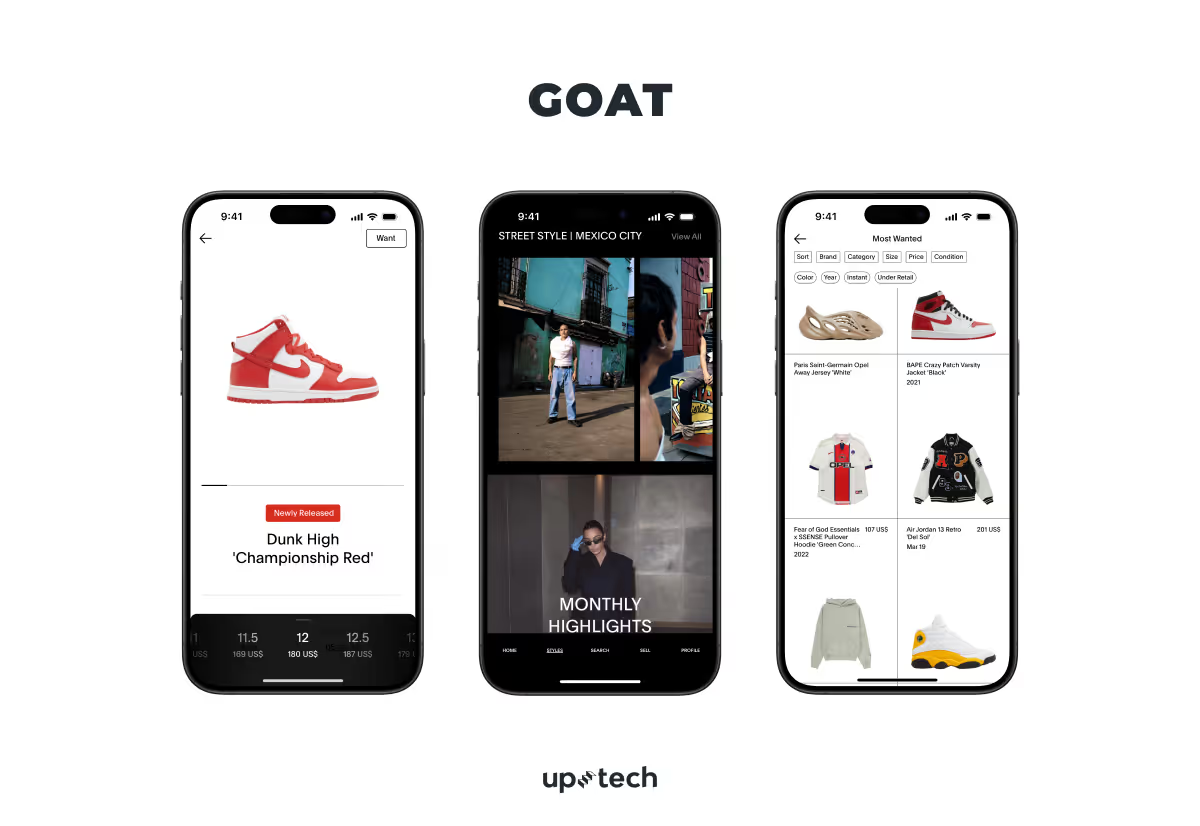
GOAT is the global retail platform for products from the past, present, and future. Since its founding in 2015, GOAT has become the leading and most trusted sneaker marketplace in the world and has expanded to offer apparel and accessories from select emerging, contemporary, and iconic brands.
The challenge
The product feed relied heavily on video. Several videos needed to load and play within the same view. This placed pressure on device resources and risked slowing down the browsing experience.
What we did
We developed custom logic to manage video loading more efficiently. The goal was smooth playback without visible delays, even when multiple videos appeared on screen.
After optimization, users could browse dynamic product content without lag. This supported performance at scale and preserved a responsive retail experience.
When people compare e-commerce vs m-commerce, they often look for a clear winner. In practice, it rarely works that way. These models serve different purposes and often work best together. Web platforms support discovery, search visibility, and detailed product research. Mobile apps strengthen retention, speed up repeat purchases, and create direct communication channels.
The right setup depends on your traffic sources, customer behavior, and long-term growth plans.
We work with both web commerce platforms and mobile commerce apps. Some clients need to strengthen their website. Others want to build or improve an app. In many cases, the solution includes both.
If you are building a new commerce product or trying to improve an existing one, we can help you define the right setup and implement it properly. Contact us and tell us what you are working on.